Digital Art Exhibitions
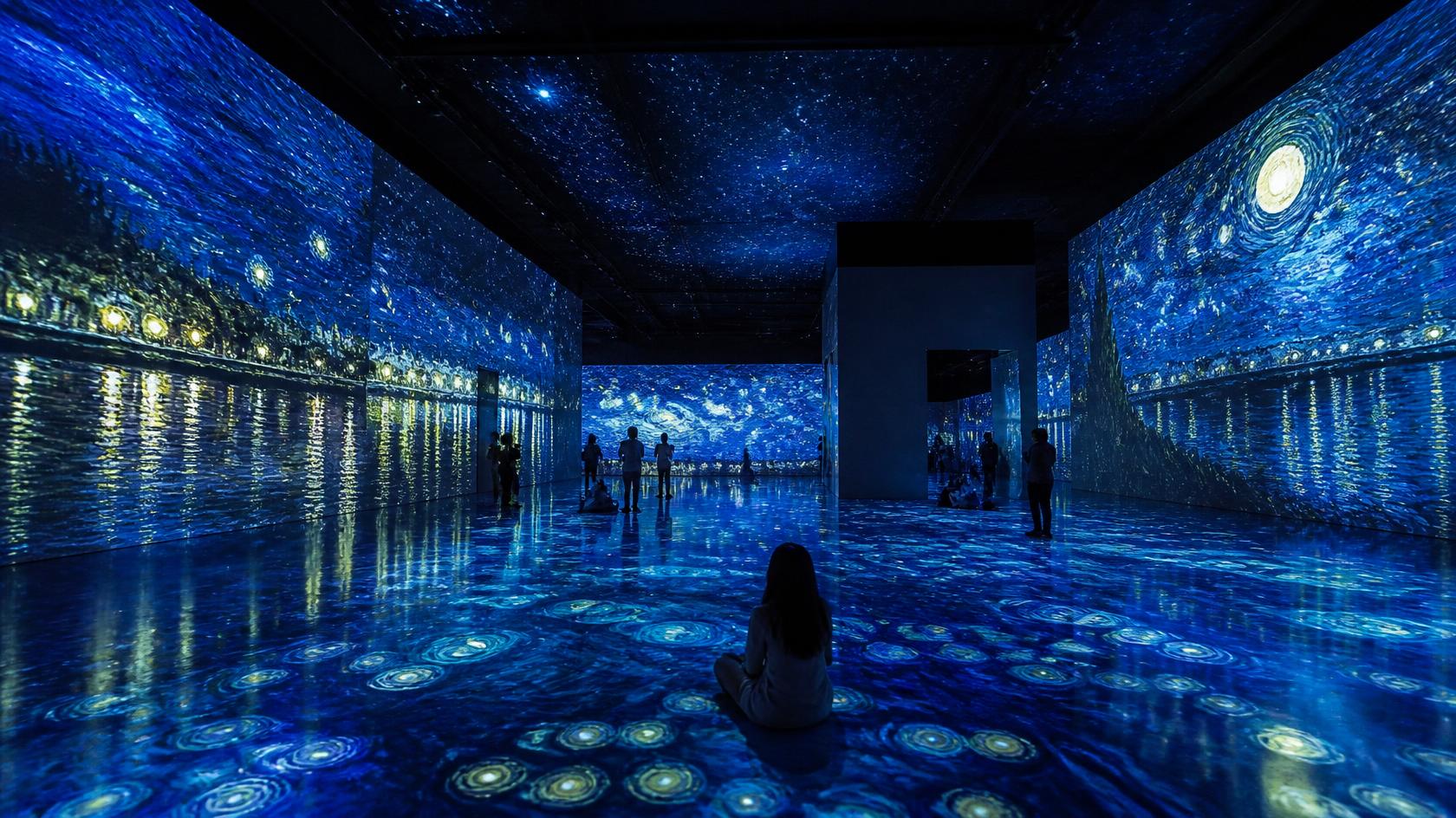
Create large-scale visual environments that allow digital artwork to extend across walls, floors, and surrounding surfaces.


Transform physical spaces into immersive visual environments for digital art, cultural installations, and creative experiences.
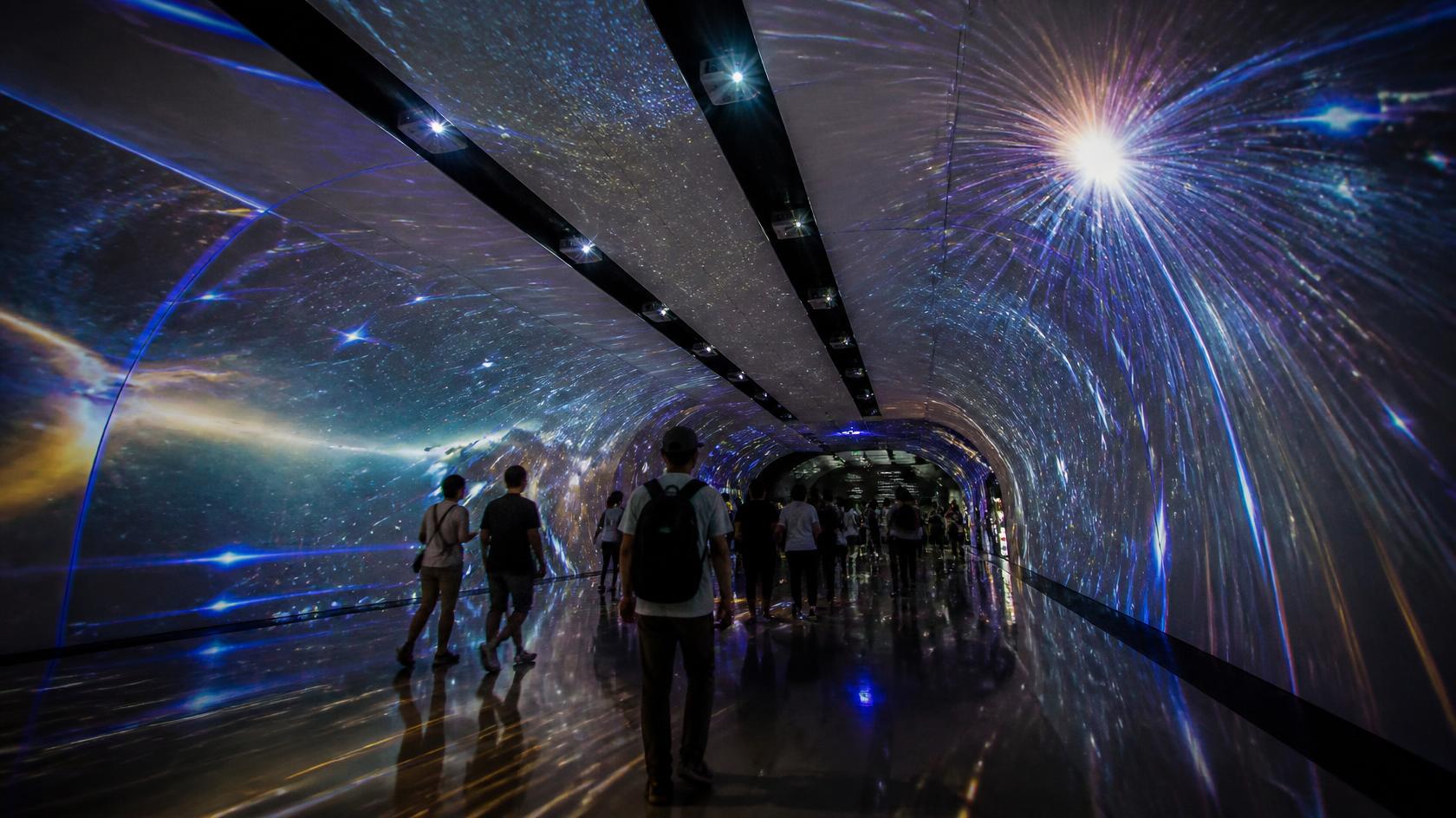
Projection can do more than display content on a screen. When combined with architecture, lighting, content, and spatial design, projected visuals can transform physical environments into immersive experiences.
From digital art exhibitions and cultural installations to themed environments and experiential attractions, projection systems can be designed around the shape, surfaces, atmosphere, and creative direction of each space.
Different creative projects require different approaches to space, visual content, and audience experience.
Create large-scale visual environments that allow digital artwork to extend across walls, floors, and surrounding surfaces.
Combine projection with spatial design to create environments where visual content becomes part of the physical space.
Use projection and audiovisual content to communicate cultural themes, stories, and creative concepts through immersive environments.
Create atmospheric spaces for themed attractions, experiential projects, and other creative environments.
The projection approach can be adapted to the architecture, visual content, audience position, and creative direction of each project.
Use large wall surfaces as immersive visual canvases for digital art, storytelling, and spatial experiences.
Explore Related ProductsExtend visual content onto floors to create a more surrounding and interactive visual environment.
Explore Related ProductsCombine multiple projectors to cover larger spaces and create continuous visual environments.
Explore Related ProductsAdapt projected visuals to architectural structures, objects, installations, and other physical surfaces.
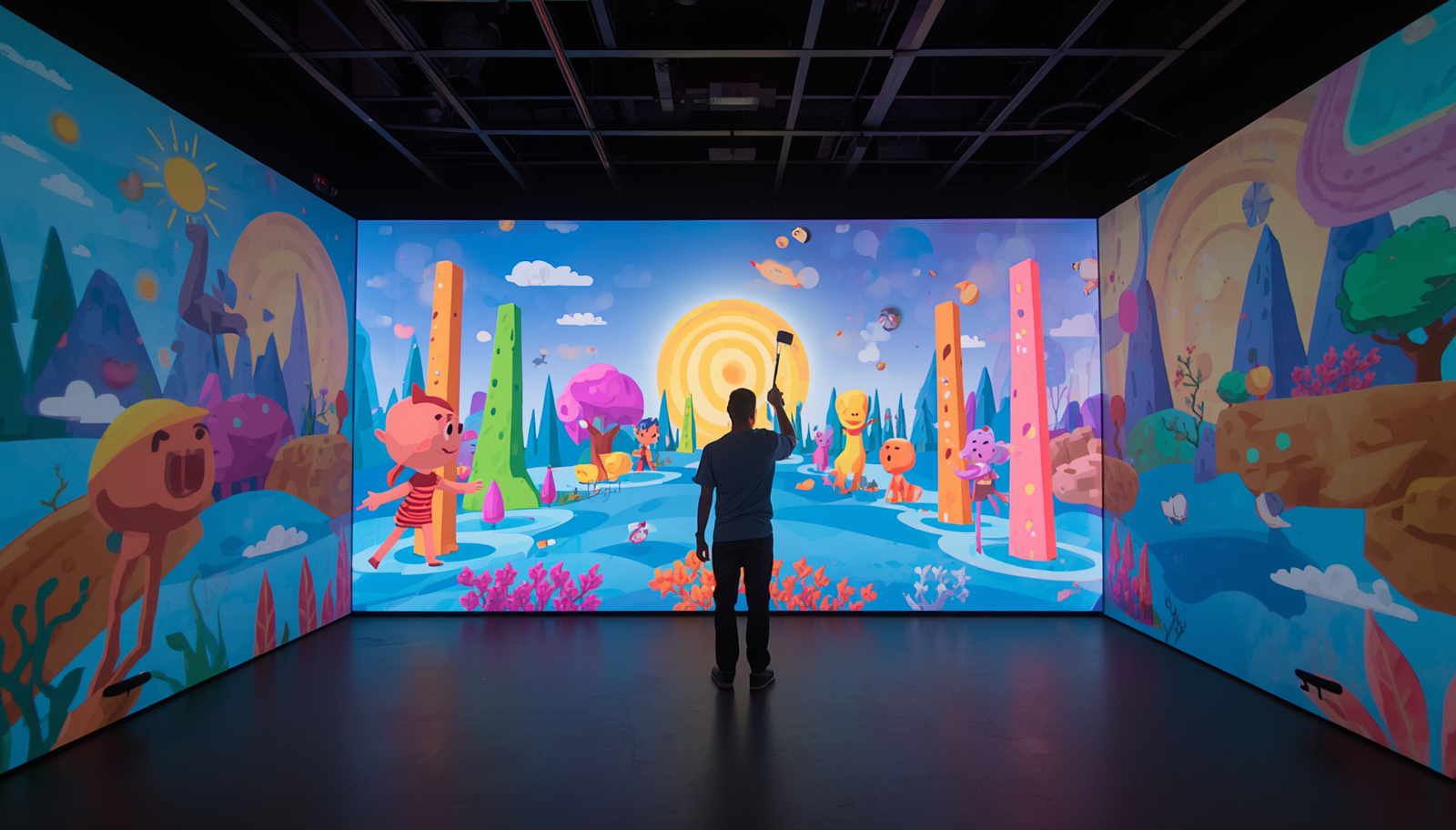
Explore Related ProductsCombine projected content with cameras, sensors, and interactive software when audience interaction is part of the experience.
Explore Related ProductsCreative concepts need a reliable technical foundation. Projection, content, interaction, and control systems need to work together as part of the overall experience.
Projection systems selected according to image quality, brightness, coverage, projection distance, and project requirements.
Combine multiple projectors to create seamless large-format visuals across multiple surfaces.
Map visual content to architectural structures, objects, installations, and other physical surfaces.
Integrate cameras, sensors, and software when the experience requires audience interaction.
Coordinate projection, content, interaction, and system timing.
Support system configuration, testing, calibration, remote debugging, and installation guidance according to project requirements.
Immersive art projects require both creative and technical planning. The visual concept, physical space, projection system, content, and installation approach should be considered together.
Room dimensions, ceiling height, surfaces, viewing positions, audience flow, and environmental conditions.
The creative concept, visual content, image size, surfaces, and overall spatial composition.
Brightness, resolution, projection distance, image size, coverage, and multi-projector requirements.
Video content, animation, interactive content, playback, synchronization, and control requirements.
Projector positioning, mounting, cabling, calibration, testing, maintenance access, and installation conditions.
Explore projection systems that can be configured for immersive art, visual installations, and experiential projects.
Immersive projection uses one or more projectors to extend visual content across walls, floors, ceilings, architectural surfaces, or other parts of a space, creating an environment rather than displaying content on a single screen.
Yes. Projection can be used to display large-scale digital artwork across walls, floors, and other surfaces. The system can be configured according to the artwork, space, viewing position, and required visual coverage.
Immersive projection generally focuses on creating a visual environment across one or more surfaces, while projection mapping adapts visual content to the shape and geometry of specific physical structures or objects. The two approaches can also be combined in the same project.
Yes. Cameras, sensors, and interactive software can be integrated when audience interaction is part of the creative concept. The required system depends on the interaction method and content.
Important factors include the space dimensions, projection surfaces, ambient light, viewing positions, projector placement, visual content, system configuration, synchronization, installation, and maintenance requirements.
Tell us about your space, creative concept, visual content, and technical requirements. We can help you explore a suitable projection and immersive solution.
Discuss Your Project